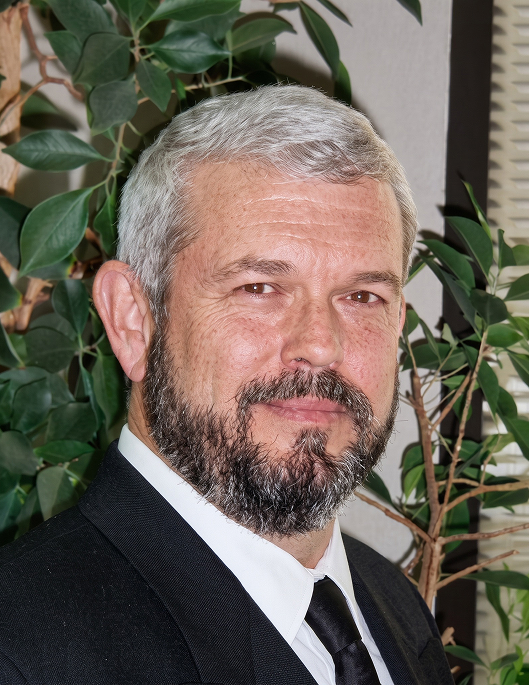
William S. Roberts, a native of Riverside, California, served 20 years in the U.S. Navy as a Surface Line Officer, specializing in engineering and anti‑submarine warfare. His deployments included Vietnam, the Mediterranean during regional conflicts, and a year at Pan Mun Jom, Korea. While in service, he earned a Master of Science from USC and a Juris Doctor from the University of San Diego. After retiring in 1989, he practiced civil litigation for two decades, focusing on product liability defense. A lifelong student of history and lecturer, he now resides in Garden Valley, Idaho with his wife Marianna.

Hatchepsut ruled during the early 18th Dynasty, approximately 1507 to 1458 BC. That makes her reign one of the longest and most prosperous in Egyptian history. She built the magnificent mortuary temple at Deir el-Bahri. She sent a famous expedition to the land of Punt, returning with myrrh trees, ebony, and exotic animals. She raised obelisks at Karnak that still stand today. She called herself King, wore the double crown, the false beard, and the bull’s tail, and appears in inscriptions with male pronouns.
Three and a half thousand years ago, a princess watched foreign kings grovel at her father’s feet. She didn’t just want to be queen. She wanted to be Pharaoh.
Hatchepsut ruled during the early 18th Dynasty, approximately 1507 to 1458 BC. That makes her reign one of the longest and most prosperous in Egyptian history. She built the magnificent mortuary temple at Deir el-Bahri. She sent a famous expedition to the land of Punt, returning with myrrh trees, ebony, and exotic animals. She raised obelisks at Karnak that still stand today. She called herself King, wore the double crown, the false beard, and the bull’s tail, and appears in inscriptions with male pronouns.
William S. Roberts is a student of history in the truest sense – not someone who reads about the past, but someone who tries to live it long enough to write it honestly. He’s spent years studying the people and culture of ancient Egypt’s 18th Dynasty, consulting with leading Egyptologists, and asking the kinds of questions that don’t have tidy answers.
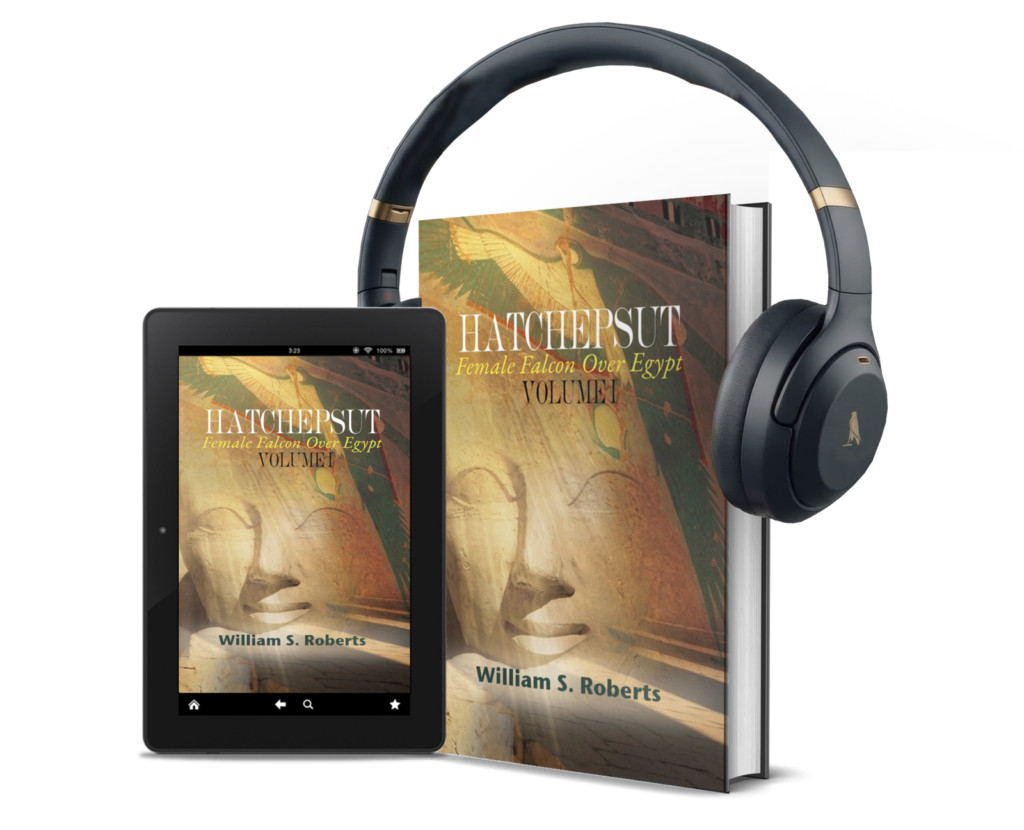
Hatchepsut: Female Falcon Over Egypt is his effort to give one of history’s most remarkable leaders the full-dimensional life she deserves.
Hatchepsut ruled during the early 18th Dynasty, approximately 1507 to 1458 BC. That makes her reign one of the longest and most prosperous in Egyptian history. She built the magnificent mortuary temple at Deir el-Bahri. She sent a famous expedition to the land of Punt, returning with myrrh trees, ebony, and exotic animals. She raised obelisks at Karnak that still stand today. She called herself King, wore the double crown, the false beard, and the bull’s tail, and appears in inscriptions with male pronouns.
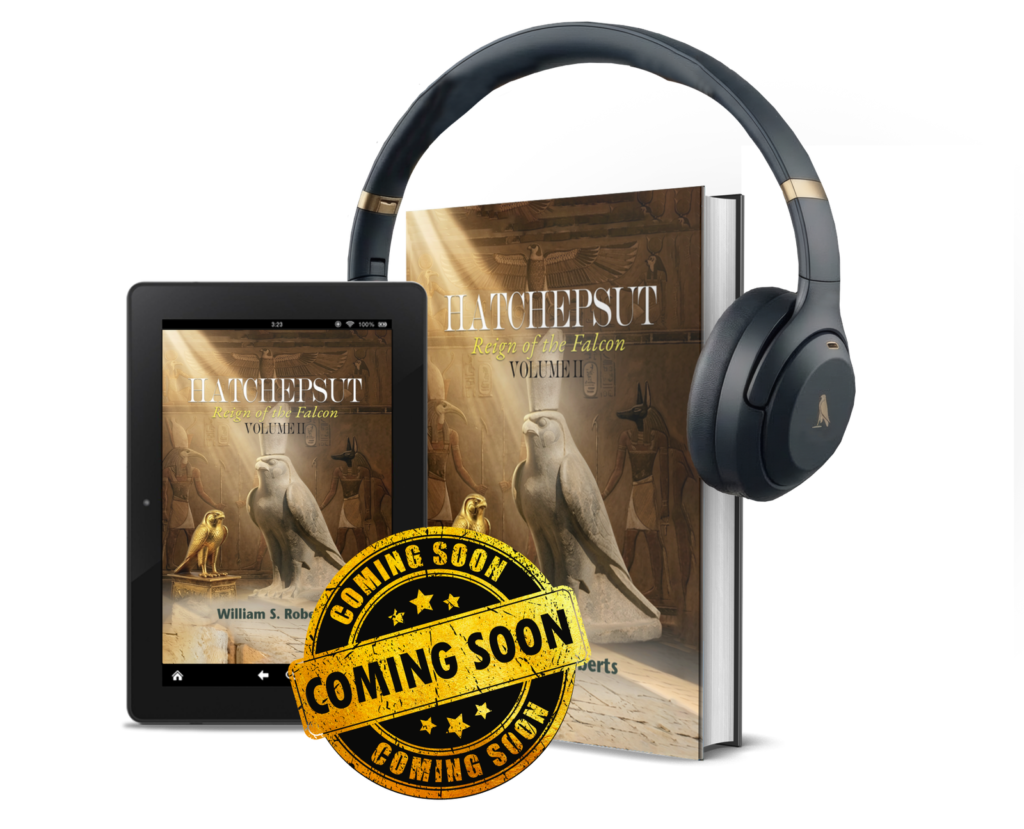
Sign up for occasional updates from William S. Roberts – new research, historical deep-dives, reading group resources, and news about future books. No noise, no spam. Just good history.